Modular home prices: What to expect when buying
Contributed by Sarah Henseler
Updated Mar 15, 2026
•7-minute read

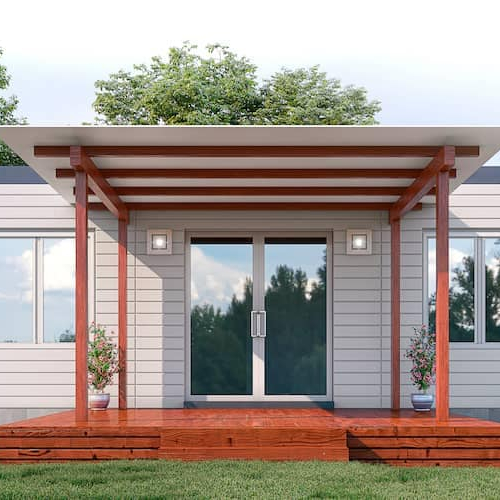
As home prices continue to climb, more home buyers are taking a closer look at modular home prices as a way to make their dreams of homeownership come true.
Modular homes are often seen as a more affordable alternative to traditional stick-built houses. Built in sections inside a factory and assembled on-site, these homes benefit from tighter quality control, fewer weather delays, and less material waste, which, in turn, helps save buyers money.
This article explores what affects modular home prices, factors that impact these costs, and how to save money on a purchase.
How much does a modular home cost?
Modular home prices typically range from $180,000 to $360,000, with the average cost around $270,000, according to HomeAdvisor. Prices vary due to the cost of the modular home kit itself, as well as the home’s design, and how it’s built and placed.
Several factors can influence where a modular home falls within that range. Home size and layout play the biggest role, followed by design choices such as upgraded finishes, roofing materials, or energy-efficient features. Location matters as well, since transportation costs, site preparation, and local labor rates all affect the final number.
Average cost of a modular home by square foot
The average price per square foot falls between $50 and $100 for the base model and from $80 to $160 for the total finished cost with installation. As of 2024, the average square footage of a stick-built house is 2,367 square feet. A modular home averages 1,800 square feet.
To put that into perspective, an 1,800-square foot modular home might cost between $90,000 and $180,000 for the base structure alone. After installation and standard finishing costs, the total price could land between $144,000 and $288,000, depending on the location and build details.
And these estimates don’t include customizations. Upgraded finishes, layout changes, energy-efficient features, or site-specific requirements can increase its overall cost.
Modular home prices can look different depending on the size of the home and what costs are included. The table below breaks down estimated costs by square footage and shows both the base model price and the total finished cost with installation.
|
Square footage |
Base model cost |
Finished cost with installation |
|
Per square foot |
$50 – $100 |
$80 – $160 |
|
1,000 square feet |
$50,000 – $100,000 |
$80,000 – $160,000 |
|
1,500 square feet |
$75,000 – $150,000 |
$120,000 – $240,000 |
|
2,000 square feet |
$100,000 – $200,000 |
$160,000 – $320,000 |
Average total cost of a modular home by type
Average modular home prices can vary depending on the type of home you choose. Size, layout, and intended use all play a role in determining overall cost, which is why pricing can look very different from one modular home style to another.
The table below breaks down the average cost ranges for several common types of modular homes.
|
Type of modular home |
Average cost range |
|
Tiny home |
$20,000 – $50,000 |
|
Townhouse |
$45,000 – $133,000 |
|
Log cabin |
$25,000 – $250,000 |
|
Cottage |
$50,000 – $150,000 |
|
Duplex |
$90,000 – $225,000 |
Factors that influence modular home costs
There are other factors that can influence module home prices. Here’s what buyers should expect.
Permits and fees
Similar to stick-built construction, there are permits and fees buyers might need to build a modular home. You should budget $500 to $5,000 for permits and local fees when building a modular home. While site preparation and installation often make up the largest portion of additional costs, many cities also charge impact fees to help fund infrastructure like roads, parks, and schools.
Land and site preparation
The cost of land is not included in the average price of a modular home, but buyers still need a place to put it. Land prices vary by location, zoning, and availability, and can be a big part of the overall budget.
Beyond purchasing land, buyers also need to prepare the site before installation. This includes clearing the property, grading the land, and making sure the site can support the home and foundation.
If a plot needs to be cleared before construction begins, land clearing typically costs between $1.30 to $2 per square foot. This depends on the size of the lot, the terrain type, and local labor rates. These costs are also separate from the home itself.
Foundation installation
A modular home needs a secure base to anchor it to the land, and the type and size of the foundation determine the cost. A slab foundation is typically the most affordable option, while a basement foundation costs more due to excavation, additional materials, and labor. On average, the cost of a modular home foundation ranges from $7 to $30 per square foot.
Utility connections
Unless the land already has utility connections, you’ll have to establish those as well. Utilities can cost up to $6,700. Here’s how those costs break down:
- Natural gas line: $550
- Sewer main: $3,200
- Water main: $1,600
- Electrical wiring: $1,350
Design and customization
Modular home prices can vary widely, and the design you choose plays a major role in the final cost. While base models are often more budget-friendly, adding custom features, upgraded finishes, or layout changes increases the total cost. Customizations can add anywhere from $10 to $150 per square foot to the cost of a modular home.
Delivery and assembly
Expect to budget $5 to $35 per square foot for delivery and installation. How much you pay depends on the home’s size and lot conditions. Many manufacturers roll these costs into one price. The delivery and assembly process can sometimes lead to delays and damage, so make sure to ask the builder how they handle such issues and what their post-install warranty covers.
Sales tax
Depending on where you live, you may need to pay sales tax on the modular home components. This tax varies from city to city and state to state, but averages about $5,000 to $10,000.
How to save money on a modular home
Modular homes are often more affordable than traditional homes, but costs can add up if you’re not careful. Here are several ways to help you save money on a modular home and keep your budget on track.
- Start with a developed plot of land. Land that already has utilities, road access, and zoning approvals can lower expenses related to site preparation and utility hookups.
- Choose a smaller, standard floor plan. Standard designs are typically less expensive than custom layouts because they require fewer structural changes. A smaller footprint also lowers costs for foundations and materials.
- Limit your upgrades. Customizations, including cosmetic and comfort features, structural additions, or energy-efficient upgrades, can raise the price of your home. Focus on what you really need rather than aesthetic extras.
- Buy your appliances separately when they’re on sale. You can purchase appliances outside the build process if it gives you access to better discounts. It also allows you to shop around for models that better match your budget and needs.
- Prioritize energy efficiency. Although energy-efficient features, such as energy-efficient insulation, windows, or HVAC systems, may cost more upfront, they can lower monthly utility bills over time.
How to finance a modular home purchase
You can finance a modular home purchase with several types of mortgages, including a:
- Conventional loan: Conventional mortgages typically require higher credit scores and larger down payments than government-backed loans. If you meet credit score and down payment requirements, they generally offer lower costs than other loan types.
- FHA loan: Backed by the Federal Housing Administration, FHA loans are designed to help buyers with lower credit scores or smaller down payments. These loans often have more lenient qualification requirements and make it easier for some borrowers to reach homeownership goals.
- VA loan: VA loans are available to eligible veterans, active-duty service members, and certain military spouses. These loans often require no down payment and do not include private mortgage insurance, which can lower monthly costs.
- USDA loan: USDA loans support buyers purchasing homes in eligible rural and suburban areas. Qualified borrowers have access to low- or no-down payment options to help make purchasing a home more affordable for low- to moderate-income borrowers. Rocket Mortgage does not currently offer USDA loans.
FAQ about modular home prices
Below are the answers to the most frequently asked questions regarding modular home prices.
How much does a modular home cost per square foot?
Per square foot, a modular home costs between $50 and $100 for the base model. The total finished cost with installations ranges from $80 to $160 per square foot.
Are modular homes cheaper than traditional homes?
Yes, modular homes are typically cheaper than traditional homes. That said, the final price depends on the size of the home, the level of customization, land and site preparation costs, and local labor and permitting fees.
Can I get a mortgage for a modular home?
Yes, you can get a mortgage for a modular home, similar to a traditional home. Modular home buyers generally have access to conventional, FHA, VA, and USDA home loans.
Do modular homes hold their value?
Modular homes can hold their value and appreciate, often at a similar rate to stick-built homes. The biggest determining factor is the location of the neighborhood in which the home is located.
What’s the difference between modular, manufactured, and prefab homes?
Modular, manufactured, and prefab homes all involve off-site construction, but the difference lies in how builders construct and regulate them. Builders assemble modular homes in factory-built sections and install them on a permanent foundation under local building codes, which is the most notable distinction when comparing modular versus manufactured homes. Manufacturers assemble manufactured homes in a factory under federal HUD standards and place them on a chassis. Prefab homes are more of a broad category that includes any home built off-site.
The bottom line: Some but not all modular homes cost less
Modular homes often come with lower upfront costs, thanks to their factory-built sections. On average, prices can be more affordable than traditional stick-built homes, especially when buyers choose standard floor plans, limit customizations, and build on developed land. But total costs vary based on factors like land prices, site preparation, foundation type, utility connections, permits, and design upgrades.
Considering purchasing a modular home? Start your mortgage application today with Rocket Mortgage to see how much you can afford.
Rocket Mortgage is a VA-approved lender, not endorsed or sponsored by the Dept. of Veterans Affairs or any government agency.
Rocket Mortgage is not acting on behalf of FHA or HUD.
Rocket Mortgage is a trademark of Rocket Mortgage, LLC or its affiliates.

Josephine Nesbit
Josephine Nesbit is a full-time freelance writer specializing in real estate, mortgages, and personal finance. Her work has been featured in U.S. News & World Report, GoBankingRates, Homes.com, Fox Business, USA Today Homefront, and other publications where she helps readers navigate the housing market and manage personal finances.
Related resources

6-minute read
How much does a tiny home cost?
The tiny house movement is growing in popularity, but how much does a tiny home cost? Learn about the factors that impact pricing in this complete guide.
Read more
5-minute read
What is a prefab home?
Read more
7-minute read
Cheapest ways to build a house: 12 tips for affordable home building
Building a home doesn’t have to break the bank. Explore these 12 ways to build a budget-friendly house, from a simpler layout to opting for cheaper materi...
Read more